Quick Answer Box
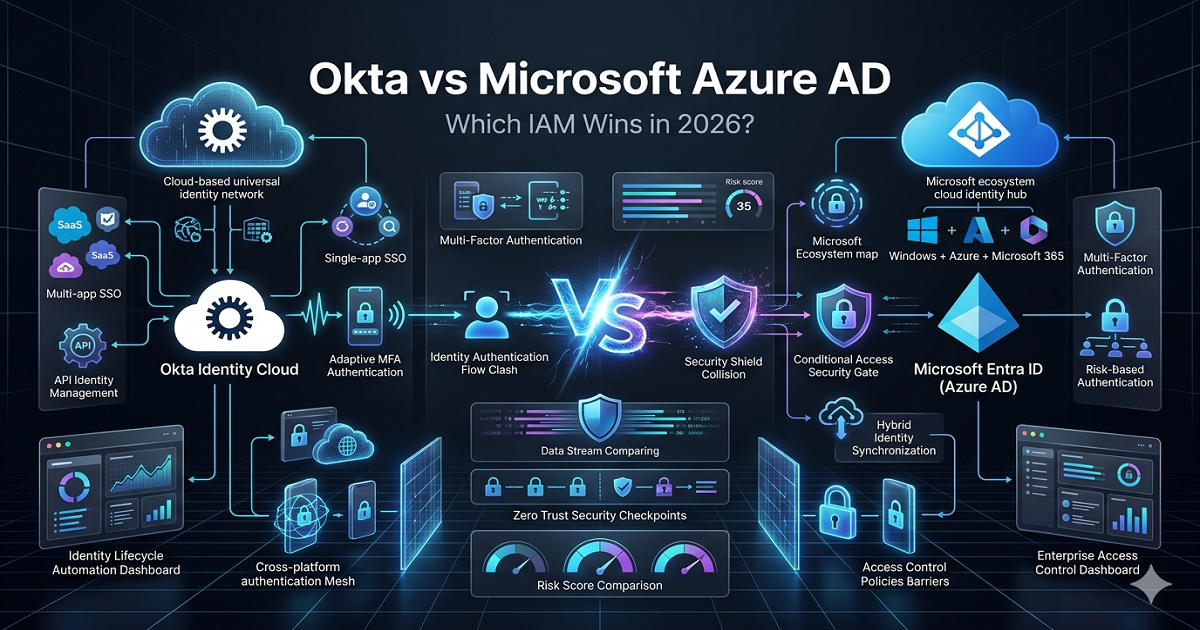
In the Okta vs Microsoft Azure AD comparison, Okta Identity Cloud wins for cross-platform flexibility, advanced identity orchestration, and best-in-class Single Sign-On (SSO). However, Microsoft Azure AD (now Microsoft Entra ID) wins for deep Microsoft ecosystem integration, cost efficiency, and hybrid cloud identity management.
| IAM Platform | Best For | Starting Price | Rating |
|---|---|---|---|
| Okta Identity Cloud | Enterprise IAM across apps | Custom Quote | 4.9/5 |
| Microsoft Entra ID (Azure AD) | Microsoft ecosystem | From $6/user/month | 4.8/5 |
Introduction
Identity is the new security perimeter in 2026. Cyberattacks are no longer focused only on firewalls or endpoints—they increasingly target user credentials, login sessions, and identity systems.
This makes the Okta vs Microsoft Azure AD debate one of the most important decisions for IT leaders in the USA and UK.
Both platforms dominate the Identity and Access Management (IAM) market:
- Okta focuses on universal identity across all applications
- Microsoft Azure AD (Entra ID) focuses on deep integration with Microsoft cloud services
According to industry research from Gartner and Microsoft security reports, over 80% of breaches involve compromised identities, making IAM platforms critical for Zero Trust security adoption.
This article breaks down both platforms in detail across security, authentication, SSO, MFA, pricing, usability, and enterprise readiness to determine the real winner.
What is Okta?
Overview
Okta Identity Cloud is a cloud-native IAM platform designed to manage user identities, authentication, and access across thousands of applications.
Key Capabilities
- Single Sign-On (SSO)
- Multi-Factor Authentication (MFA)
- Universal Directory
- Lifecycle Management
- API Access Management
- Zero Trust integration
Okta is widely used in multi-cloud and hybrid environments where organizations rely on diverse SaaS applications.
What is Microsoft Azure AD (Entra ID)?
Overview
Microsoft Azure Active Directory (now Microsoft Entra ID) is Microsoft’s identity platform integrated deeply with Microsoft 365, Azure, and Windows environments.
Key Capabilities
- Conditional Access policies
- SSO for Microsoft apps
- MFA and passwordless authentication
- Identity protection AI
- Hybrid identity synchronization
- Risk-based access control
It is the default IAM system for organizations using Microsoft cloud services.
Okta vs Microsoft Azure AD — Feature Comparison
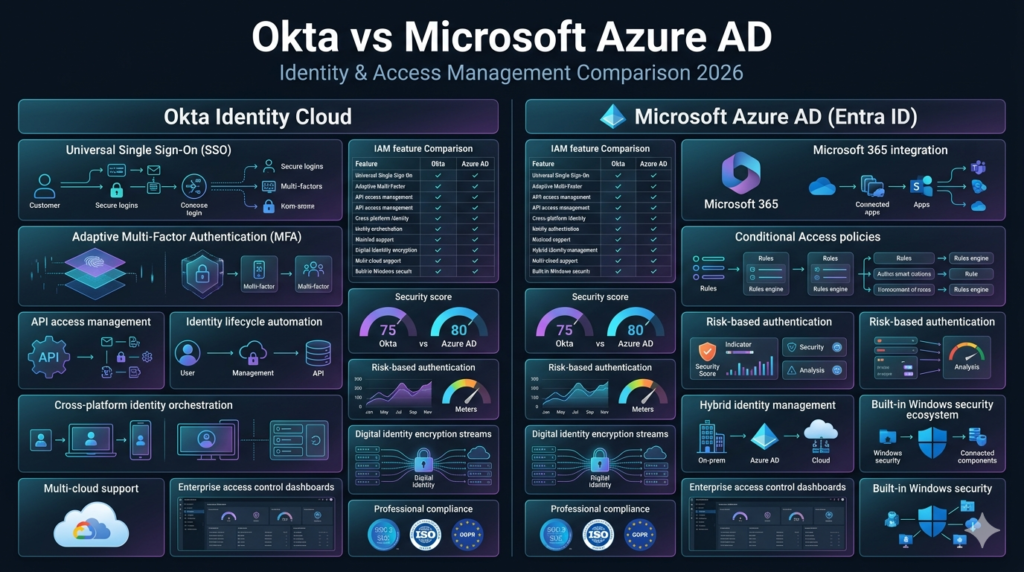
| Feature | Okta | Microsoft Azure AD |
|---|---|---|
| Single Sign-On (SSO) | Excellent | Excellent |
| Multi-Factor Authentication (MFA) | Excellent | Excellent |
| Zero Trust Support | Strong | Stronger (native Microsoft integration) |
| App Integrations | 7,000+ apps | Strong Microsoft ecosystem focus |
| Hybrid Identity | Good | Excellent |
| User Experience | Very smooth | Smooth (Microsoft optimized) |
| API Access Management | Excellent | Moderate |
| Lifecycle Automation | Excellent | Strong |
| Customization | High | Medium |
| Security Intelligence | Strong | Very strong (Microsoft threat data) |
Okta Review — Strengths & Weaknesses
Why Enterprises Choose Okta
Okta is designed for organizations that use multiple SaaS platforms across different vendors.
Pros
- Best-in-class SSO across thousands of apps
- Strong API ecosystem
- Flexible identity orchestration
- Vendor-neutral architecture
- Excellent scalability for enterprises
Cons
- Higher cost than Microsoft Entra ID
- Requires configuration expertise
- Less native OS-level integration
Expert Insight
Okta is often preferred in multi-cloud environments (AWS, Google Cloud, SaaS-heavy companies) where identity needs extend beyond Microsoft ecosystems.
Microsoft Azure AD Review — Strengths & Weaknesses
Why Microsoft Wins in Ecosystem Integration
Microsoft Entra ID is deeply embedded into Windows, Azure, and Microsoft 365.
Pros
- Seamless Microsoft 365 integration
- Strong conditional access policies
- Cost-effective pricing
- Built-in security intelligence
- Excellent hybrid identity support
Cons
- Limited flexibility outside Microsoft ecosystem
- Less powerful cross-platform SSO than Okta
- Advanced features require premium tiers
Expert Insight
Azure AD becomes significantly more powerful when an organization is already fully invested in the Microsoft ecosystem.
Security Comparison — Okta vs Azure AD
Identity Security
Both platforms provide strong IAM security, but with different strengths:
Okta Strengths
- Universal identity security
- Advanced API protection
- Broad third-party integrations
Azure AD Strengths
- Risk-based conditional access
- Microsoft threat intelligence
- Built-in Windows security integration
Zero Trust Implementation
- Microsoft Azure AD wins for native Zero Trust integration
- Okta is stronger in cross-platform identity enforcement
Pricing Comparison
| Plan | Okta | Azure AD |
|---|---|---|
| Entry Level | Custom pricing | Free |
| Mid Tier | Custom pricing | $6/user/month |
| Premium | Custom enterprise pricing | $9/user/month |
Cost Insight
Microsoft Azure AD is significantly more cost-effective for SMBs and mid-size businesses, while Okta is better suited for enterprises with complex identity needs.
Real-World Use Cases
Okta Use Case
A US-based SaaS company using AWS, Slack, Salesforce, and Google Workspace deployed Okta:
- Reduced login complexity by 65%
- Improved security posture across multiple vendors
- Centralized identity management across 40+ applications
Azure AD Use Case
A UK-based financial institution using Microsoft 365 and Azure implemented Entra ID:
- Achieved SOC 2 compliance faster
- Reduced identity-related incidents by 70%
- Improved internal access control policies
Expert Tips — Choosing Between Okta and Azure AD
Choose Okta if:
- You use multiple cloud vendors
- You need advanced API identity management
- You operate a multi-cloud architecture
- You require vendor-neutral IAM
Choose Azure AD if:
- You use Microsoft 365 or Azure
- You want lower IAM costs
- You need hybrid identity support
- You prefer integrated security tools
FAQ
Which is better: Okta or Azure AD?
Okta is better for multi-cloud environments, while Azure AD is better for Microsoft-centric organizations.
Is Azure AD the same as Entra ID?
Yes. Microsoft Azure AD has been rebranded as Microsoft Entra ID.
Is Okta more secure than Azure AD?
Both are highly secure. Okta excels in cross-platform identity security, while Azure AD excels in integrated Microsoft security intelligence.
Which IAM is cheaper?
Microsoft Azure AD is generally more cost-effective than Okta.
Can Okta replace Azure AD?
Yes, but it is more commonly used in non-Microsoft or multi-cloud environments.
Do enterprises use Okta or Azure AD more?
Both are widely used. Azure AD dominates Microsoft environments, while Okta dominates multi-vendor SaaS environments.
Also read about Best Identity and Access Management Software 2026.
Final Verdict — Which IAM Wins?
🏆 Winner: It Depends on Your Ecosystem
There is no single absolute winner in the Okta vs Microsoft Azure AD debate.
Overall Winner by Category:
- 🥇 Okta Identity Cloud → Best for multi-cloud, SaaS-heavy enterprises
- 🥇 Microsoft Azure AD (Entra ID) → Best for Microsoft ecosystem and cost efficiency
Conclusion
The Okta vs Microsoft Azure AD comparison comes down to architecture, not superiority.
- Choose Okta for flexibility, scalability, and cross-platform identity management
- Choose Azure AD for deep Microsoft integration and cost-effective IAM security
Both platforms are industry leaders in Identity and Access Management and are essential for Zero Trust security strategies in 2026.
For more expert IAM comparisons, cybersecurity software reviews, and enterprise security guides, visit LifeSure Security at https://lifesure.site.
Disclaimer
This article is for informational purposes only. Pricing, features, and product capabilities may change over time. Always verify official vendor documentation before making purchasing decisions. LifeSure Security may include affiliate partnerships without affecting editorial independence.